Microcosms

Microcosms, a collection of short-short stories by Tony Ballantyne and myself, is out today from Infinity Plus Books. Here’s a bit more about the volume…

From the publisher:

Philip K. Dick Award nominated writers Tony Ballantyne and Eric Brown bring together forty-two fantastical short-short stories, featuring new takes on every SF trope from alien invasion, robots, and time-travel, to stellar exploration, the future of computing, and the nature of the human soul. Tony Ballantyne is the author of the acclaimed Penrose hard SF novels, Twisted Metal and Blood and Iron, as well as the groundbreaking and surreal fantasy novels Dream London and Dream Paris. Eric Brown has written many SF and crime novels including The Kings of Eternity, Kethani, and The Serene Invasion. Together they are a hundred years old.

~

For more information about the collection, click here.

~

Introduction to Micro…

Eric Brown

This volume came about one summer a few years ago when Tony came up to Scotland with his family. We were wandering around the pretty seaside town of North Berwick and talking about recent short stories we’d written. Tony happened to mention that he was working on some short-shorts, which he hoped to place with Nature, and I mentioned a short-short market that I’d recently sold to, Daily SF. I then suggested that, when we had enough tales to form a volume, we should gather them all together and attempt to find a publisher.

Years passed; we wrote short-shorts between bigger projects, and Keith Brooke who runs Infinity Plus Books expressed an interest in publishing Microcosms.

Tony Ballantyne is not only a fine novelist – as equally adept in the Hard SF sub-genre as in Fantasy – but he’s a gifted short-story writer, with several of his stories gracing the pages of Analog and other top markets, and appearing in Best of the Year anthologies. He also excels at the short-short story, where originality and incisive vision are requisite. In his intelligence, playful wit and economy of language, the writer he most reminds me of is the late, great Robert Sheckley. This volume contains such gems as “Dear Burglar”, “The Cleverest Man in the World”, and “The Scooped Out Man” the latter an alien invasion tale to end them all. But my favourite is the irreverent, witty, self-referential story about a writer, Another (almost) True Story, a tale which I would have given my right arm to have written.

~

Introduction to Cosms…

Tony Ballantyne

Eric and I met at the 2Kon SF convention in Glasgow in the year 2000. We both had a short story up for the BSFA award. Eric won, I lost, but by way of consolation I made a great friend.

Friendship aside, I remain a massive fan of Eric’s. He has written an impressive number of novels and short stories; his output includes what is possibly my favourite short story collection ever: Kethani (Solaris 2008). As well as being a prolific writer he is an eminent critic with a deep knowledge of the genre. He is a keen champion of the new, the forgotten and the underrated, and is a valuable source of advice to writers no matter where they are in their career (he taught me the trick of just listening to the subconscious, of getting things down as quickly as possible on the page.)

In this collection you’ll find scintillating flashes of his talent. His writing is by turns witty, melancholic, horrifying and deceptively gentle, but always imbued with his trademark sense of humanity. Take a look at “In the Recovery Room”, “Meeting Myself on Planet Earth”, “Memorial” and “History of Planet Earth” to see what I mean.

~
Leave a comment

Filed under News

Michael G. Coney’s Short Stories 9

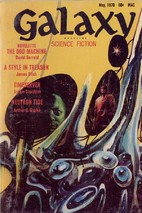
Whatever Became of the McGowans?” (Galaxy, May, 1970.)

Coney rings the changes yet again with his ninth published story.

Richard and Sandra Nevis have bought a homestead from the Jade Exploitation Company on the planet of Jade, where they grown Jadegrass which they then sell back to the company. They also feed the grass into a convertor which molecularly transforms the grass into foodstuffs for their own consumption. They’re sequestered on the planet, many hundreds of miles form their nearest farmer neighbours – though there is a vacant farmstead next door to them, empty when they arrived, which once belonged to the McGowans. “Whatever Became of the McGowans?” they wonder from time to time throughout the story. They find out after things start going wrong: a harvester speeds up and runs out of control; they suffer a peculiar lassitude, and their skin turns yellow; their newborn son is similarly listless and jaundiced… Things come to a head when Richard starts to grow tendrils from the soles of his feet, and takes root in the soil of the planet.

If Coney had had this idea later in his career, I suspect he would have spun a more plotted, character-oriented tale. As it is, it’s a pleasing, easy-to-read horror-cum-mystery story, with a bit of an info-dump of a dénouement: for all that it’s yet another entertaining read.

Rating: 5/10

~

Leave a comment

Filed under News

Space Ace

A new edition of my children’s book, Space Ace, is now available from Barrington Stoke. This version has been rewritten and edited to appeal to the 5-7 year age range.

Billy can’t wait to take a trip around Earth with Grandad. But Grandad’s old spaceship malfunctions and soon the two are zooming off on a fantastic tour of outer space.

Space Ace is a fast-paced story for younger children packed full of amazing facts about the solar system.

~


Leave a comment

Filed under News

XB-1

The Czech science fiction magazine XB-1 has just translated the first story in my Salvageman Ed series, published over here in the fix-up novel as Salvage, from Infinity Plus Books. The first tale is entitled Dissimulation Procedure”. It will be followed soon by “The Soul of the Machine”, “Three’s a Crowd”, and the rest on due course.

Here’s the rather striking cover…

~

Leave a comment

Filed under News

Michael G. Coney’s Short Stories 8

zzzzzzzzzzzzconeyTroubleshooter” (If Science Fiction, May-June, 1970.)

I’d read “Troubleshooter” before, many years ago, but returned to it now with no memory of the story. Having read it again, I understand why. It’s a very minor, pedestrian piece about DeGrazza, the troubleshooter of the title, who works for Galactic Computers. When ships belonging to aliens from Altair begin malfunctioning, the aliens blame Galactic Computers, and the company sends DeGrazza to find out what’s going wrong. The Altairean ships are fitted with both Terran computers and their own organic ones – made from the aliens’ minds, which are telepathic. DeGrazza, a troubled soul plagued by nightmares, solves the problem, and is thanked by the aliens: “Goodbye, DeGrazza of the tortured mind and plunging compulsions. […] You are so immersed in self-pity that you are hardly aware of those around you…” which, it is hinted, is why he makes a successful troubleshooter.

The problem with “Troubleshooter” is that DeGrazza’s character is not successfully integrated into the story – we’re told what he’s like, not shown. Also, the plot is perfunctory. In later tales, plotting will become Coney’s marked strength.

Rating: 3/10

~

2 Comments

Filed under News

Michael G. Coney’s Short Stories 6 & 7

“Discover a Latent Moses” (Galaxy, April, 1970.)

Although I’ve read this story in Coney’s fix-up novel Winter’s Children, I haven’t read it as a stand-alone, so I’ll comment on the story when I’ve tracked down the issue of Galaxy, April, 1970.

~

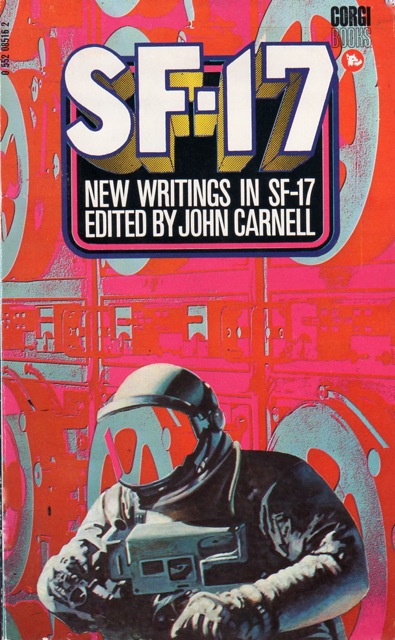
nwwrtngsns1970The True Worth of Ruth Villiers” (New Writings in SF 17, edited by John Carnell, Dobson Books, 1970.)

Michael Coney’s seventh published story is a wonderful indictment of conservative politics. It’s narrated by a minor civil servant called Archer who works for the local government as a Valuation Officer. We’re in near future Britain and the Darwinist party is in power. Under this regime, every citizen has a Social Value Credit Rating, calculated according to their profession and earnings. Their Value dictates the level of assistance they can hope to receive from the state, when it comes to healthcare or – in the case of Ruth Villiers – when they suffer an accident.

Seventeen year-old Ruth has fallen down an old mineshaft which has collapsed, burying her alive under tons of rubble. Archer is sent in to assess the level of help she can afford, and he decides that an excavator and crew can be brought in to dig her out. However, when the digger hits a seam of granite, the cost of cutting through the seam escalates beyond the girl’s Credit Rating. Archer, a purblind proponent of the system until now, begins to have second thoughts – suffers, in the parlance of the time, Undue Sympathy – and even considers hiring, illegally and to his eventual cost as he might lose his job, a more expensive excavator to cut through the granite. But before Archer weakens fully, his boss comes to the site and suggest a cheaper alternative: a slim bore hole will be drilled, allowing air, food and water to reach the stricken girl. This she can afford, until her Credit Rating runs out in a few months…

She is saved, in the end, by an unforeseen event – a deus ex machina, it might be said, but one that fits beautifully into the remit of the story.

Archer – at one point almost convinced of the inhumanity of the system – has his narrow-minded politics vindicated: “Surely, now, nobody can criticise the system. […] Not even me.”

The True Worth of Ruth Villiers” is Michael Coney’s best tale to date, a nicely crafted, well characterised story of social injustice and the inability of some to acknowledge iniquity. It prefigured the rise of Thatcher by almost ten years.

Rating: 7/10

~

Leave a comment

Filed under News

Trump

So America has voted a narcissistic, bigoted fascist as its leader. There’s an excellent article about the debacle in the New Yorker.

I’m glad I live in liberal Scotland, but there’ll be no getting away from his evil influence.

~

8 Comments

Filed under News

Michael G. Coney’s Short Stories 5

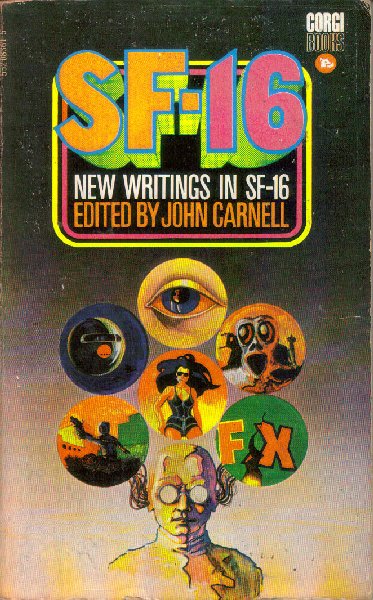
nwwrtngsng1970R26/5/PSY and I” (New Writings in SF 16, edited by John Carnell, Dobson Books, 1969.)

The story opens in a psychiatrist’s office, where Hugo Johnson has been brought by ‘Central’ after failing to leave his apartment for two months. Johnson lives in an over-populated, regimented world; he’s anti-social and bitter: “I had had my fill of friends. They sponged on you, drank your drinks, invaded your privacy and drove you mad with incessant, nattering monologues on matters of supreme unimportance.” Johnson is diagnosed with chronic apathy and told he is a potential suicide. As treatment he is given a companion – a robot who will live with him until he’s cured.

The robot arrives and proceeds to drive Johnson to distraction: eating his food, mimicking him, and ultimately making a pass at a woman Johnson invited back to his room.

The story closes with Johnson back in the psychiatrist’s office. “I was cured. I had taken the necessary steps towards getting out and meeting people.” And the reason for this cure? It’s not giving much away, as most readers would have worked out the reason by the end of the tale: the shrink reveals that, “The robot possessed an almost perfect replica of your own brain!” For the past three weeks, Johnson has been living with himself.

R26/5/PSY and I” is another minor though entertaining tale. Coney has yet to hit his stride in the short story format.

Rating: 4/10

~

2 Comments

Filed under News

Michael G. Coney’s Short Stories 4

vision-of-tomorrow-2A Judge of Men” (Vision of Tomorrow, December, 1969.)

Coney rings the changes with his fourth published story, that old favourite staple of the SF genre – the biological puzzle tale. Spacers Bancroft and Scott come to the planet of Karamba – Bancroft is a trader, Scott a bio-ecologist – ostensibly to trade with the aliens for Shoom, but in fact so that Scott can work out why the Karambans’ birth rate is falling off. Shoom is a much sought-after commodity in the outside universe, a kind of pelt worth millions, and if the aliens die out then the precious Shoom will perish with them.

The Karambans are monopods, one-footed aliens with one eye, one arm, one ear, etcetera: “All in all, they look rather like sawn-off elephants’ legs with a grey daffodil stuck on top.”

Bancroft is an old-hand on the planet, Scott the eager neophyte, and when the latter trespasses upon a sacred Karamban burial ground, landing them in what at first seems like hot water, he makes a discovery that solves the puzzle of the aliens’ declining birth-rate. He comes up with a simple solution which is to the benefit of everyone, humans and Karambans alike.

It’s a minor, mildly entertaining story, graced with an excellent black and white illustration by Eddie Jones.

Rating: 4/10

~

Leave a comment

Filed under News

Michael G. Coney’s Short Stories 3

t1690Sixth Sense” (Vision of Tomorrow, August, 1969.)

Sixth Sense” combines many features which will crop up again and again in Coney’s short fiction and novels in the years to come: a southern English coastal location, a young femme fatal, an ageing vamp, a lonely older man, and a bar-cum-hotel.

Jack Garner, who narrates the tale, runs a small guest-house on the coast. He’s a loner who hates the city and fled to the countryside ten years earlier. As the story opens, he’s distracted and impatient as he waits for a new arrival. He thinks back to an incident, three years before…

Then, two couples arrived for a short holiday, Hera and ‘Piggy’ Piggot – Hera ageing (but still attractive, in her own eyes at least) and ‘Piggy’, overweight and downtrodden. With them are the Blantyres, the mousy Joyce and husband Jim whom Jack characterises as a gigolo-type – he assumes that Hera and Jim are having an affair. With the Piggots is their precocious fourteen year-old daughter, Mandy. What follows over the next few days, as the sultry, stormy weather clamps down on the coast, is the playing out of Jack’s suspicions. Driven from the hotel by her mother’s infidelity and her father’s passive acceptance, Mandy climbs the dangerous Gull Crag cliff and gets into difficulties, only to be saved by Jack.

And how is this science fiction?

Well, in this future the human race is telepathic, and speech a thing of the past. Coney excels at portraying societies in which just one thing has changed, with massive implications, and “Sixth Sense” is a prime example of this. Jack Garner, our narrator, is a freak, a throwback… (but to reveal quite why he is would spoil the denouement) and it is this which allows him to save Mandy’s life.

The story closes on a typically Coneyesque, sentimental note, and a neat last line.

Sixth Sense” was reprinted in World’s Best SF 1970, edited by Donald A. Wollheim and Terry Carr, published by Ace Books.

Rating: 6/10

~

Leave a comment

Filed under News